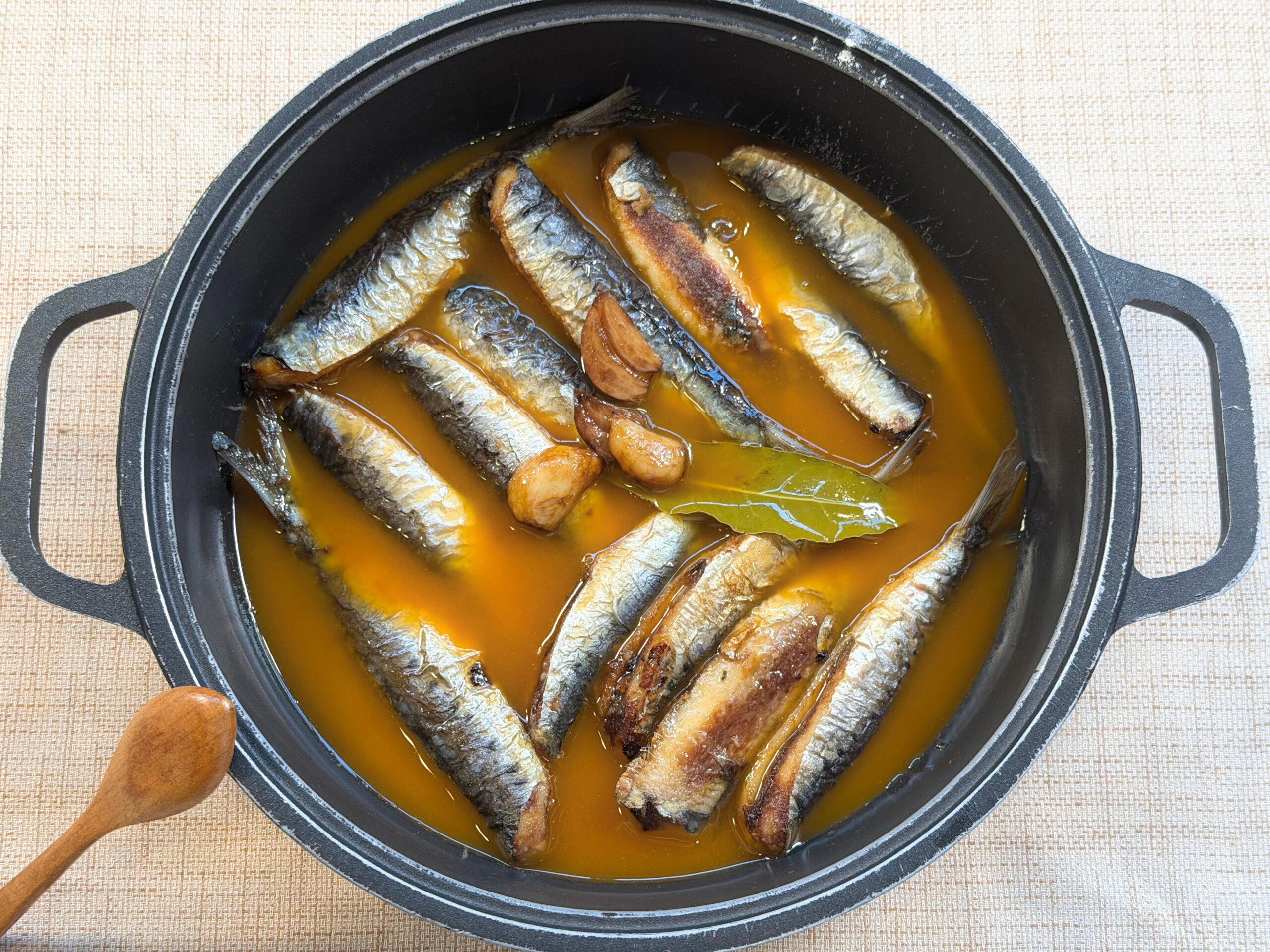
Escabetx, or escabeche, is a popular Catalan and Spanish dish, normally involving marinating ingredients in an acidic sauce. Its variations stretch across Spain, Portugal, Italy, the Philippines, Latin America, and the Caribbean. Its cousin is ceviche, but escabetx also differs: ingredients are normally marinated after they’re cooked.
Escabetx can be both a dish and a cooking method; writes Christian Reynoso for Epicurious,
“It’s a marinade. It’s a brine. It’s a main dish, a side dish, and a condiment. Escabèche is a transcontinental method of preserving and flavoring food that has crossed your dinner table more times than you’d think.”
Today, the recipe normally involves marinating fish, other meats, or vegetables in a vinegar-based sauce. Cooked with spices like bay leaf, alliums like garlic or onion, and select vegetables, the ingredients can be marinated while cooking, or added as a sauce to cooked ingredients.
Thought to be derived from the historical Arabic dish sikbaj (سِكْباج), the first documented version of Catalan escabetx is found in the medieval manuscripts of Llibre de Sent Soví, the oldest surviving Catalan cookbook manuscript. While the original manuscript, and its historical provenance, has been lost to time, versions of escabetx recipes were collected and preserved across various historical iterations of the Sent Soví.
Escabetx became an important dish for RELISH to link how changes in its recipe culminate in a present set of conventions or techniques that make a dish or method like escabetx recognizable. “Recreating” an historical dish is always an impossible task: ingredients, foods, techniques, tastes, and tools change or disappear; medieval recipes also look and read very differently from today’s conventions.
What, then, can we learn from reading and making a dish from an old recipe? What lessons do historical recipes tell us about how people documented, valued, and preserved recipes—and for whom?
Designing the method
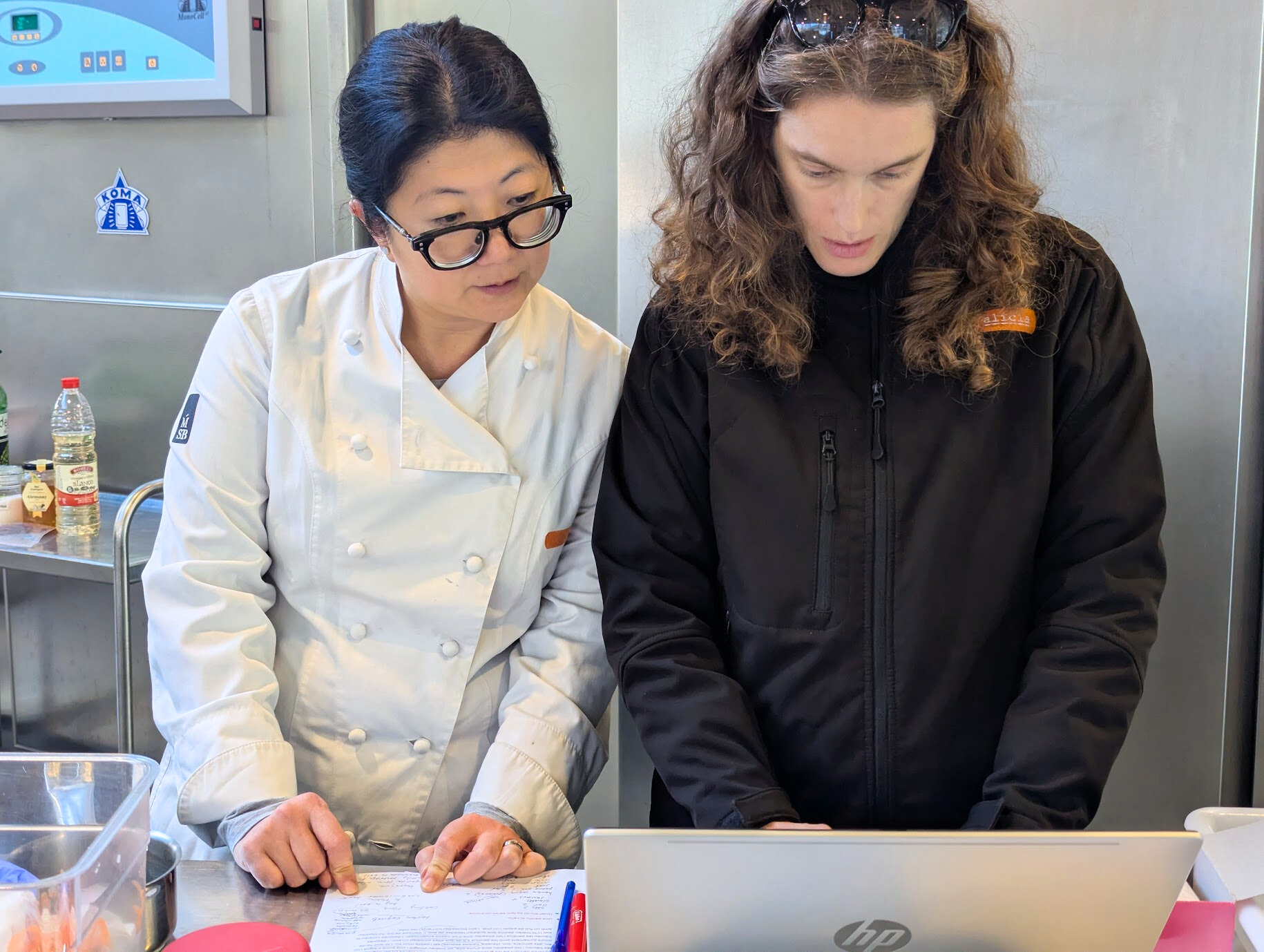
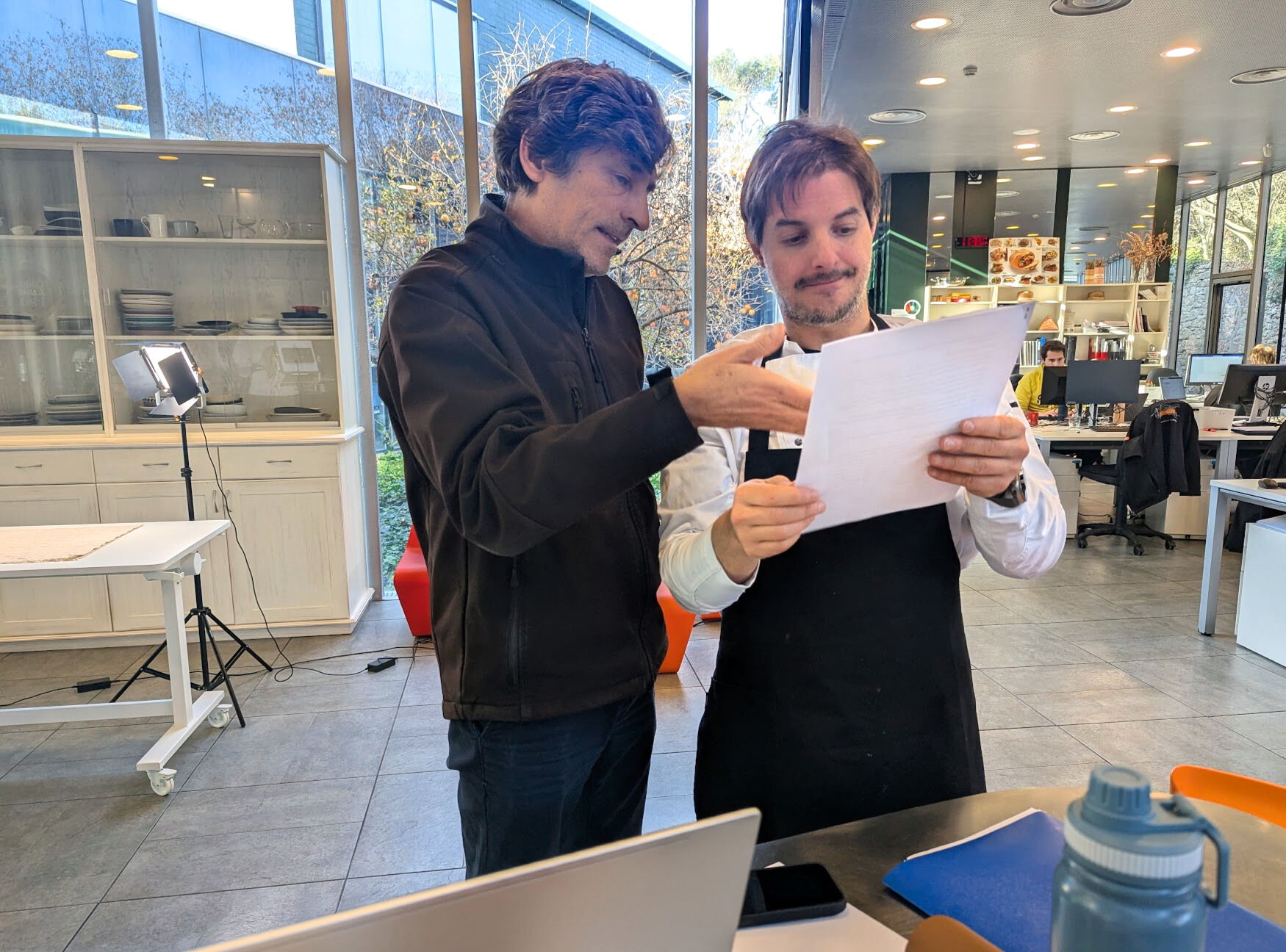
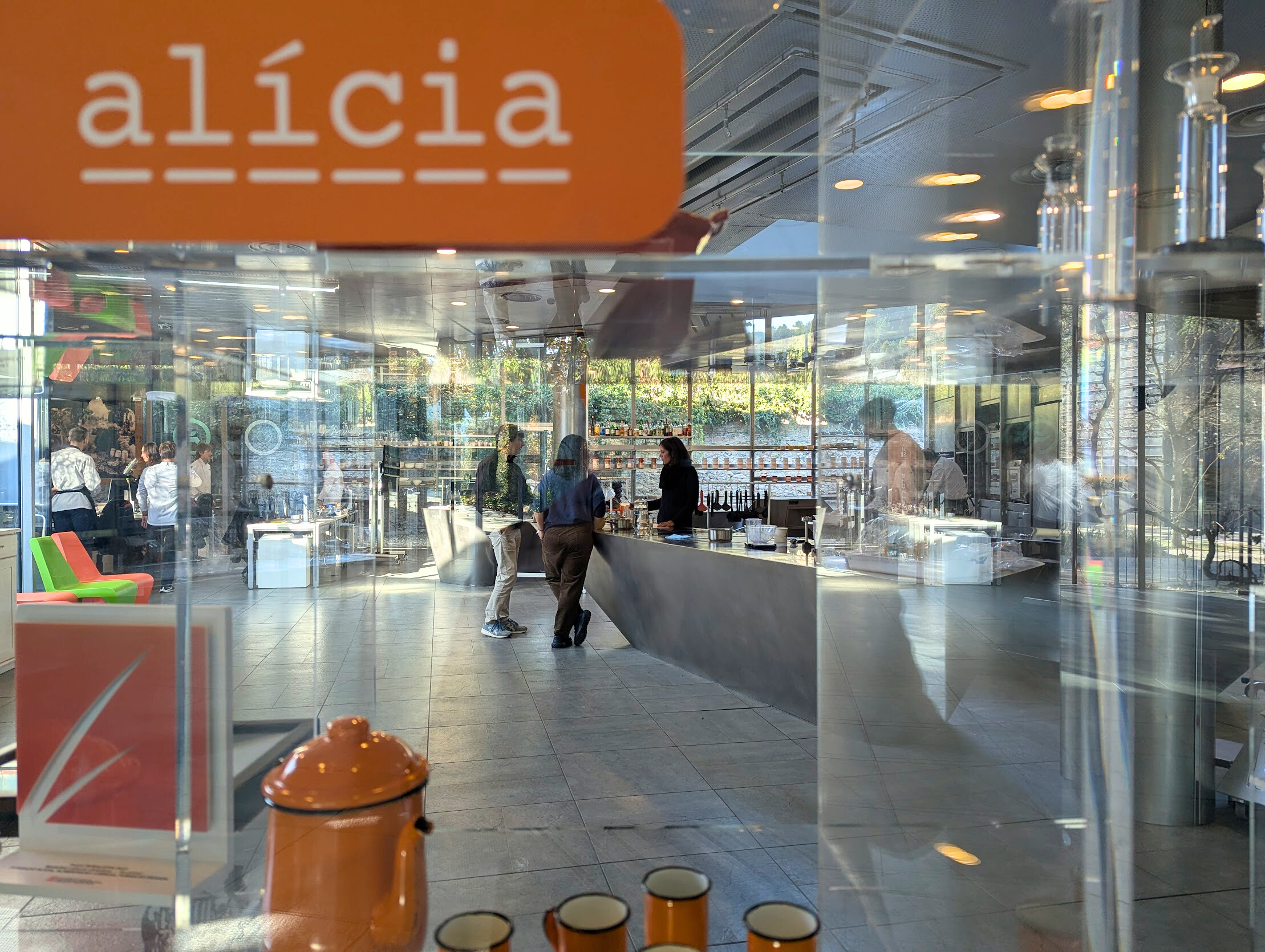
In December 2025, RELISH members met at Fundació Alícia’s campus outside of Barcelona to reflect on our ability to understand recipe changes and interpret these variations over time (and space). Our goal wasn’t to try and perfectly replicate an historical recipe. Instead, we want to understand pragmatically how bringing the history and future together in making escabetx can be a useful method. This method was one based on many complex interplays between interpretation, experience, intuition, familiarity, and preference.
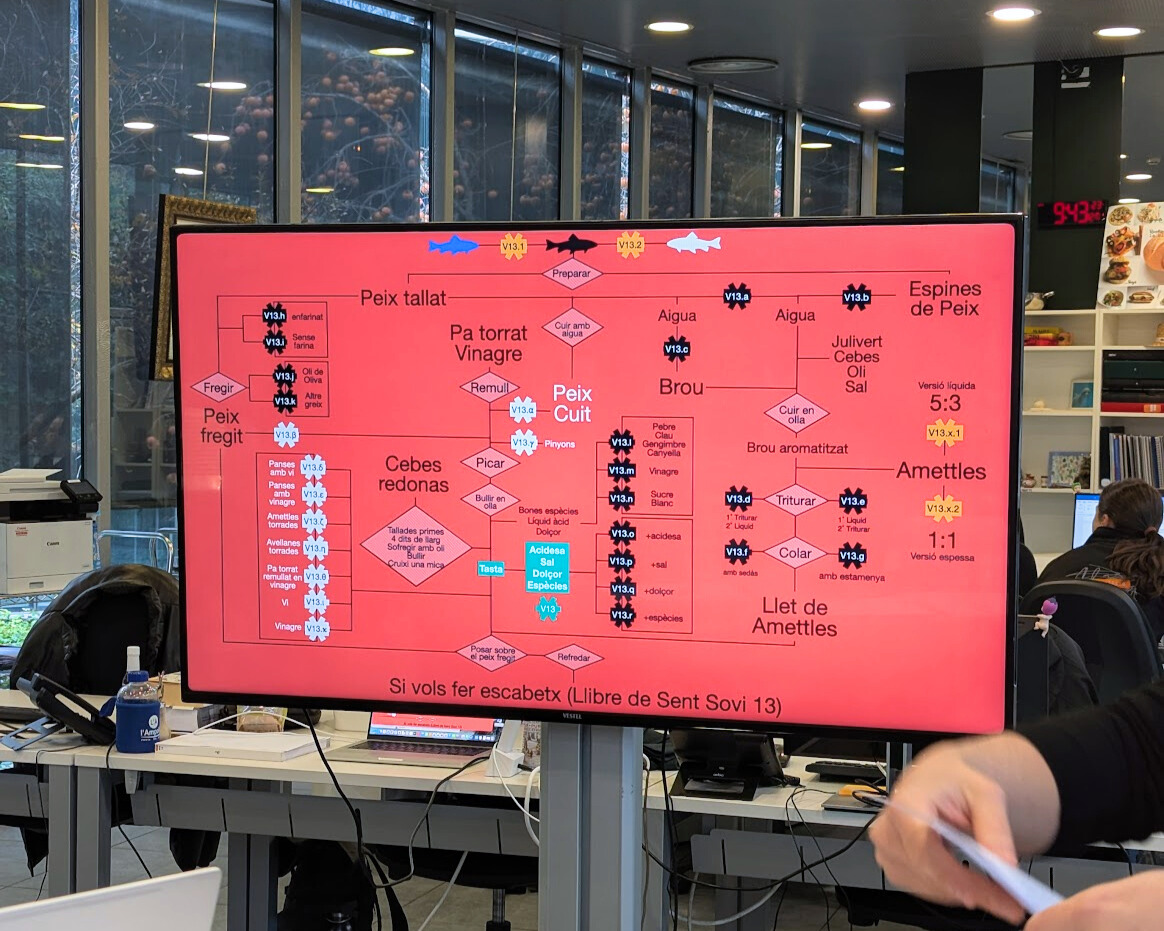
Drawing from the 7 Portes Collection of Historical Recipes of Catalan Cuisine, including the Llibre de Sent Soví, partners at Fundació Alícia outlined a method for interpreting these recipes by identifying vital points—where substitutions or omissions would likely greatly change the dish, and potentially make the recipe no longer “escabetx” but something else.
Next were complementary points where, depending on one’s interpretation, a dish could result in less critical variations or departures from “escabetx” as a recognizable dish. Finally, optional points were those additions or recommendations located in a recipe that provided flexibility for individual tastes and preferences.
Including RELISH members from Durham University and Barcelona Supercomputing Center, we tested these various points and historical versions of escabetx recipes over five days.
We started with the earliest known documented version of escabetx from the 14th century. Titled in Llibre de Sent Soví as “Si vols fer escabetx,” or “If you want to make fish in vinegar sauce,” the recipe is written as follows:
[ORIGINAL MEDIEVAL CATALAN] “Si vols fer escabetx a peix frit hages brou de peix, mit-hi cebes e oli e sal e juivert, e courà en una olla. Hages llet d’ametlles ab lo brou (llet d’ametlles preparada amb el brou). Enaprés hages del peix frit—e de cuit en aigua, si n’has—e pica’l ab pa torrat e mullat ab vinagre; e si has pinyons, pica-ne. E mit-ho a bullir en una olla ab bones espècies e agror e dolçor. Aprés hages cebes rodones prim tallades, que hagen quatre dits de llong, e mit-les a sosengar ab oli que a penes bulla. E puis, quan la ceba serà assosengada, que un poc crusca, mit-la ab la salsa quan bullirà, e de l’oli sosengat, de guisa que no hi parega massa; e assobora-ho de dolçor e d’agror e de sal e salsa. E pots-hi mentre panses picades ab vi o ab vinagre, e posar sobre lo peix frit calent. E deu ésser refredat ans que sia donat.
Jo he vist que picaven, ab la salsa, ametlles e avellanes torrades e pa torrat en vinagre mullat, e que en destrempaven ab vi e ab vinagre.“
[ENGLISH TRANSLATION] “If you want to make fish in vinegar sauce out of fried fish, make fish broth, put in onions, oil, salt and parsely, and cook it in a pot. Take almond milk made with the broth. Then take the fried fish—and boiled fish, if you have any—and mince it with toasted bread soaked in vinegar; and if you have pine nuts, grind some. Set it to boil in a pot with good spices, verjuice and sweetening. After that take round onions that are four fingers thick and slice them thin, and fry them with oil that is scarcely boiling. Then, when the onion is fried, when it crunches a bit, put it in with the sauce when it boils, and some of the oil from frying, so it is not too noticeable; and flavor it with sweetening, verjuice, salt and spices. You can put in raisins ground with wine or vinegar, and put it on top of the hot fried fish. It should be cooled before it is served.
I have seen that with the seasonings, they ground toasted almonds and hazelnuts and toasted bread soaked in vinegar, and that they mixed it with wine and vinegar.”
No suggested measurements, timing, tools, equipment, or varieties of ingredients (such as fish, vinegar, or oil). Perhaps documented by a cook for a wealthy family’s plate, the recipe instructions are most definitely not “future-proof”—they were written out of the context, needs, and preferences of their author. But they are still legible, so we would follow along!
Back to esca-basics
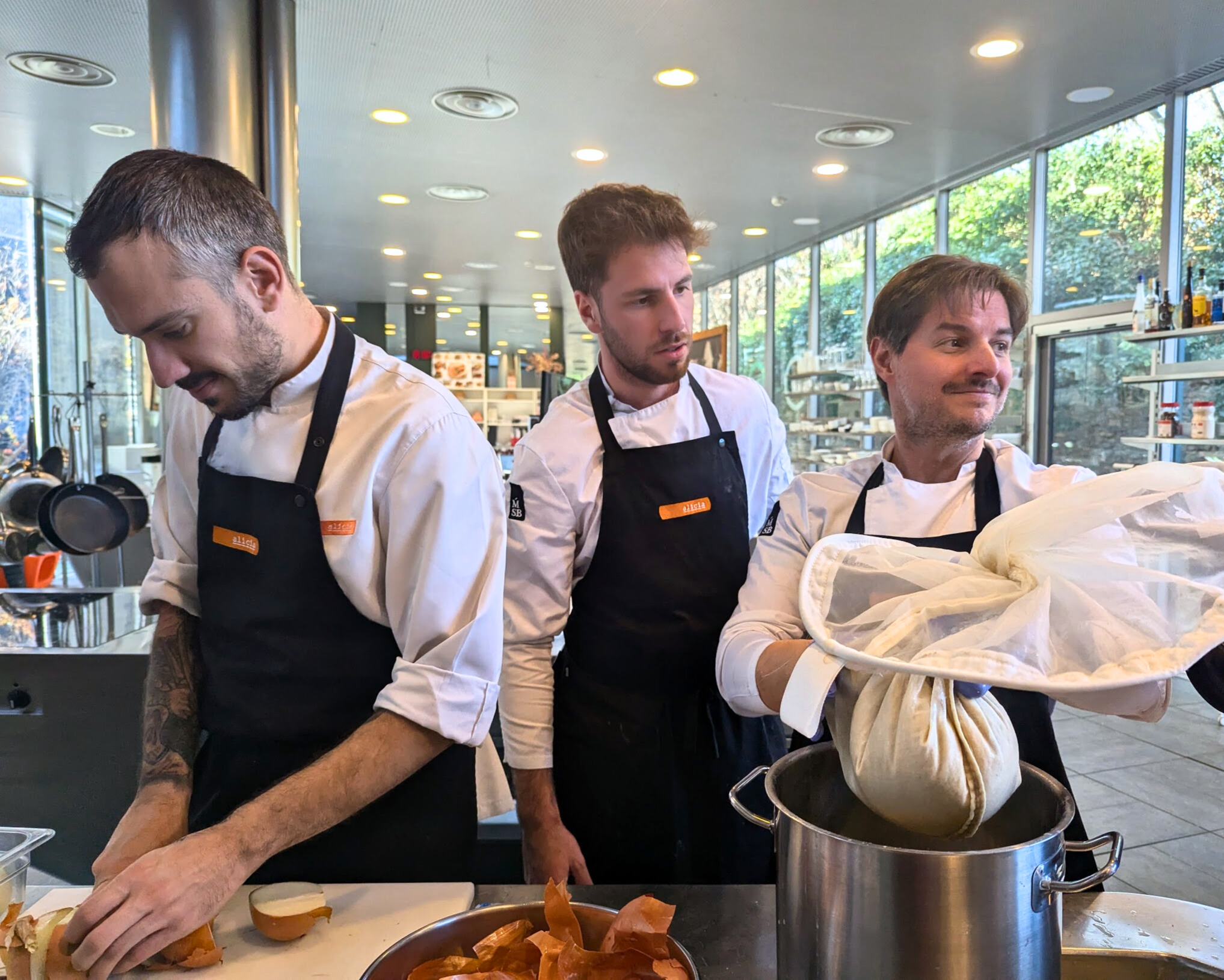
Splitting into three teams, each of us, depending on our historical, cultural, or culinary familiarity (or unfamiliarity), had to think about the many ways to approach and interpret this dish. For example, what did “good” mean when it came to spices—good quality? Preferred flavors? Type or mixture of spices? Intensity of seasoning? Or take almond milk: How does one make this?
The questions went on: Which kind of vinegar would be useful? What was the right balance or intensity of sourness and sweetness? How fine should the almonds be ground for the milk? How long should they be soaked in the broth? How should the toasted bread, vinegar, and fish mixture be mixed or ground? At what consistency? Should the sauce be reduced?
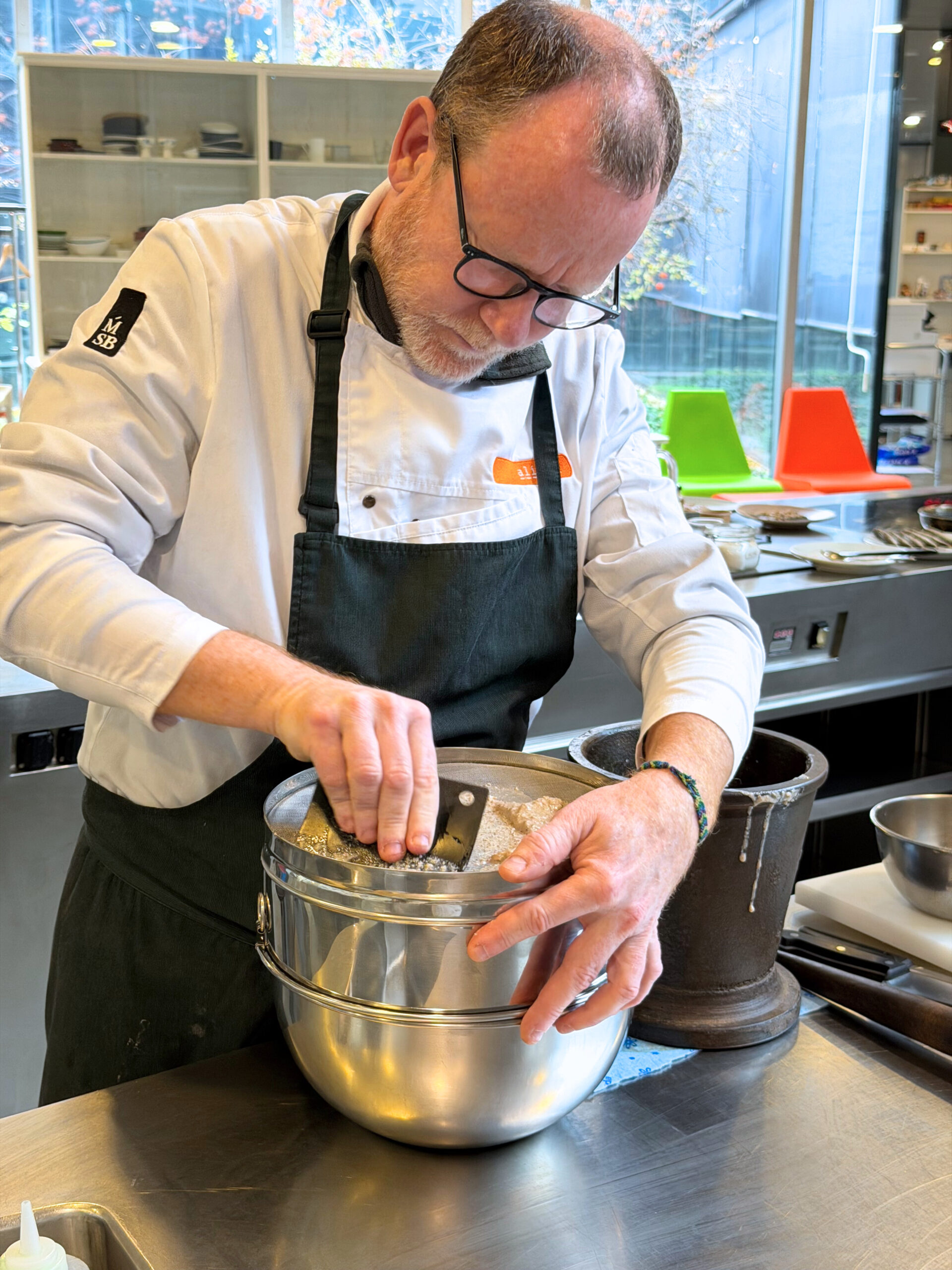
We also discussed equipment—using induction burners, stainless steel pots and pans, chef’s knives, cutting boards, and other equipment was unavoidable, especially within the workshop time restrictions. The most contentious equipment decision ended up in “Blender Gate:” Should we grind or pound ingredients in a mortar and pestle? In a food processor or immersion blender? Would almonds have been historically sourced pre-ground by medieval servants or cooks?
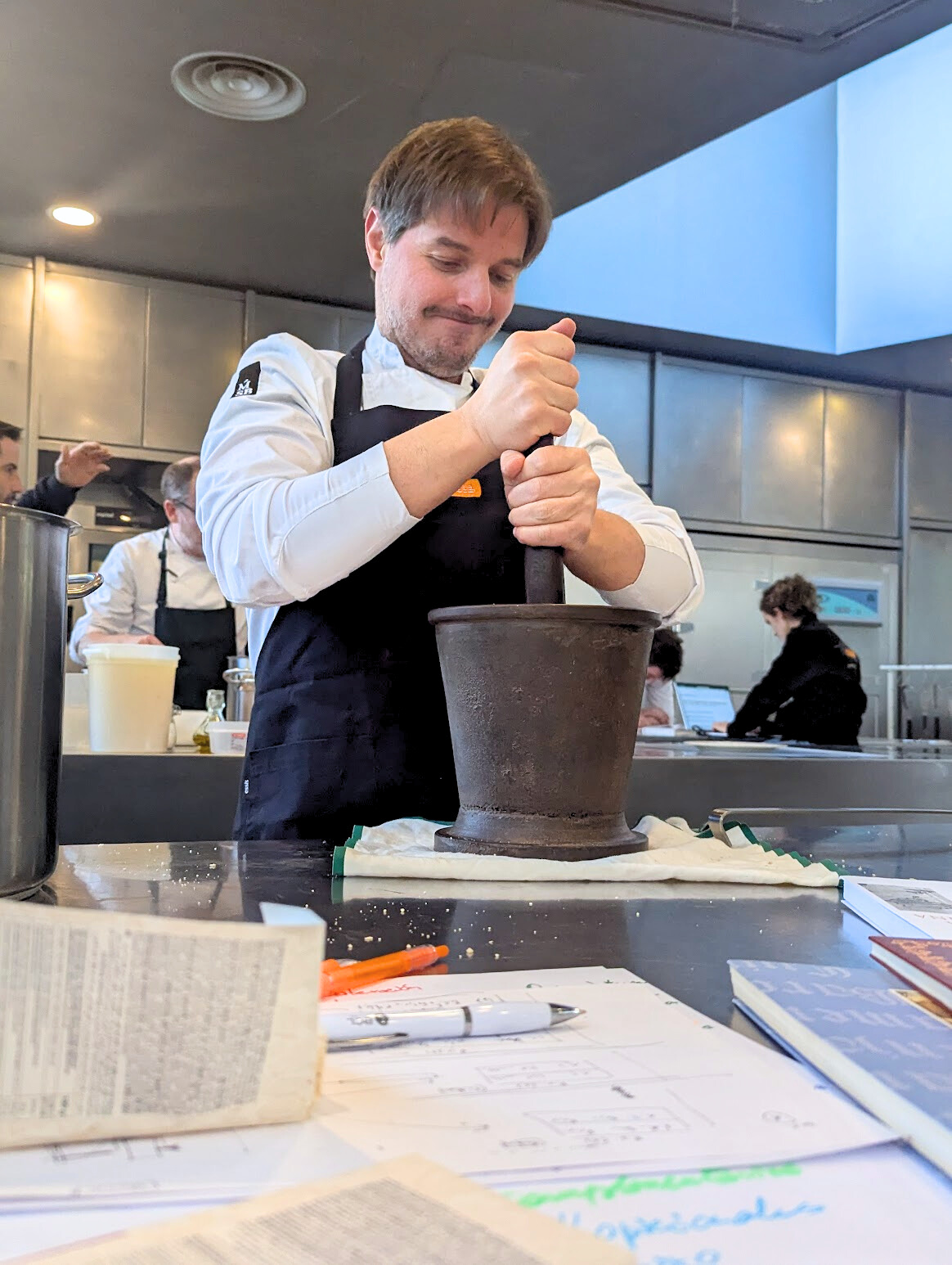
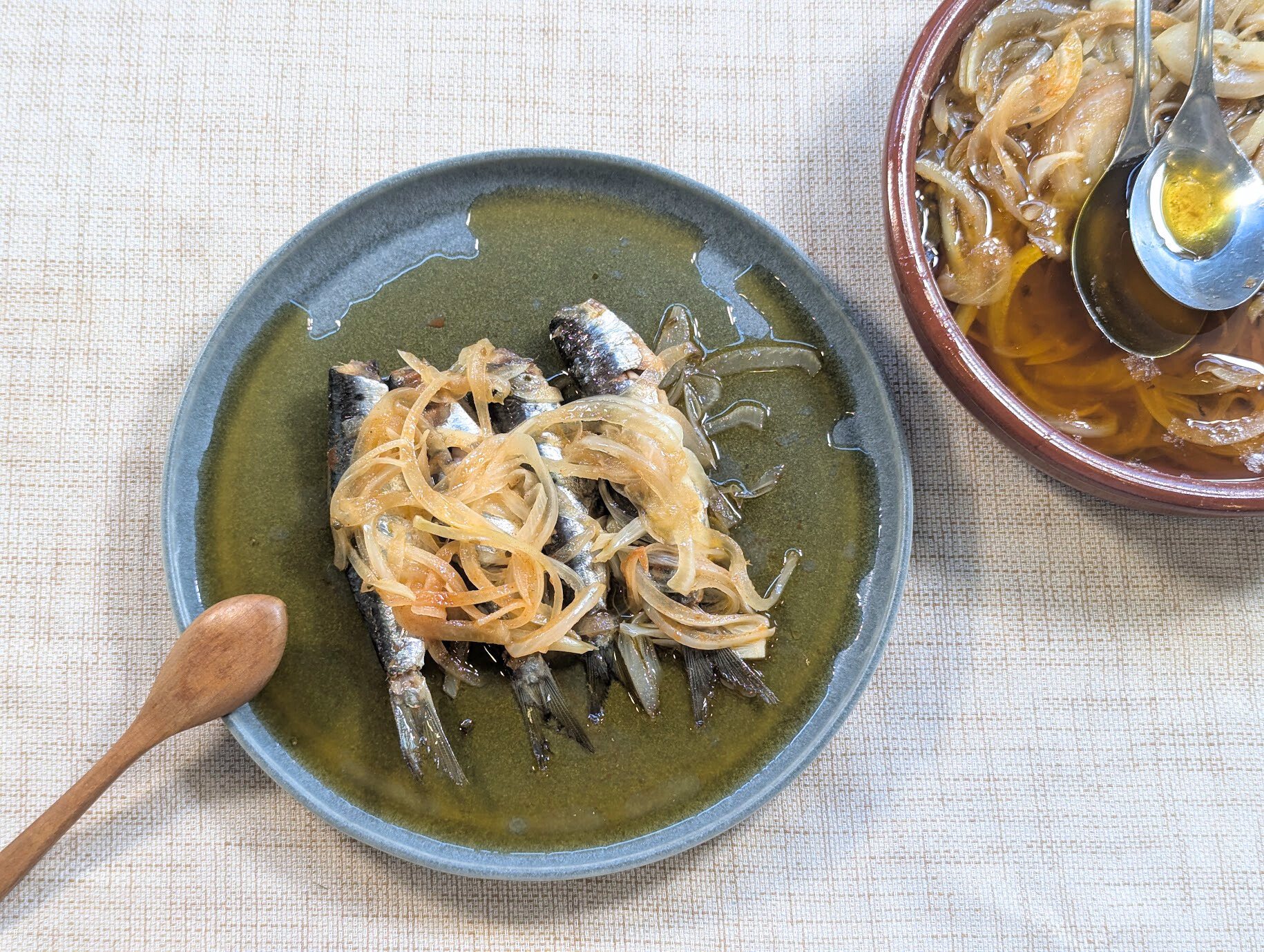
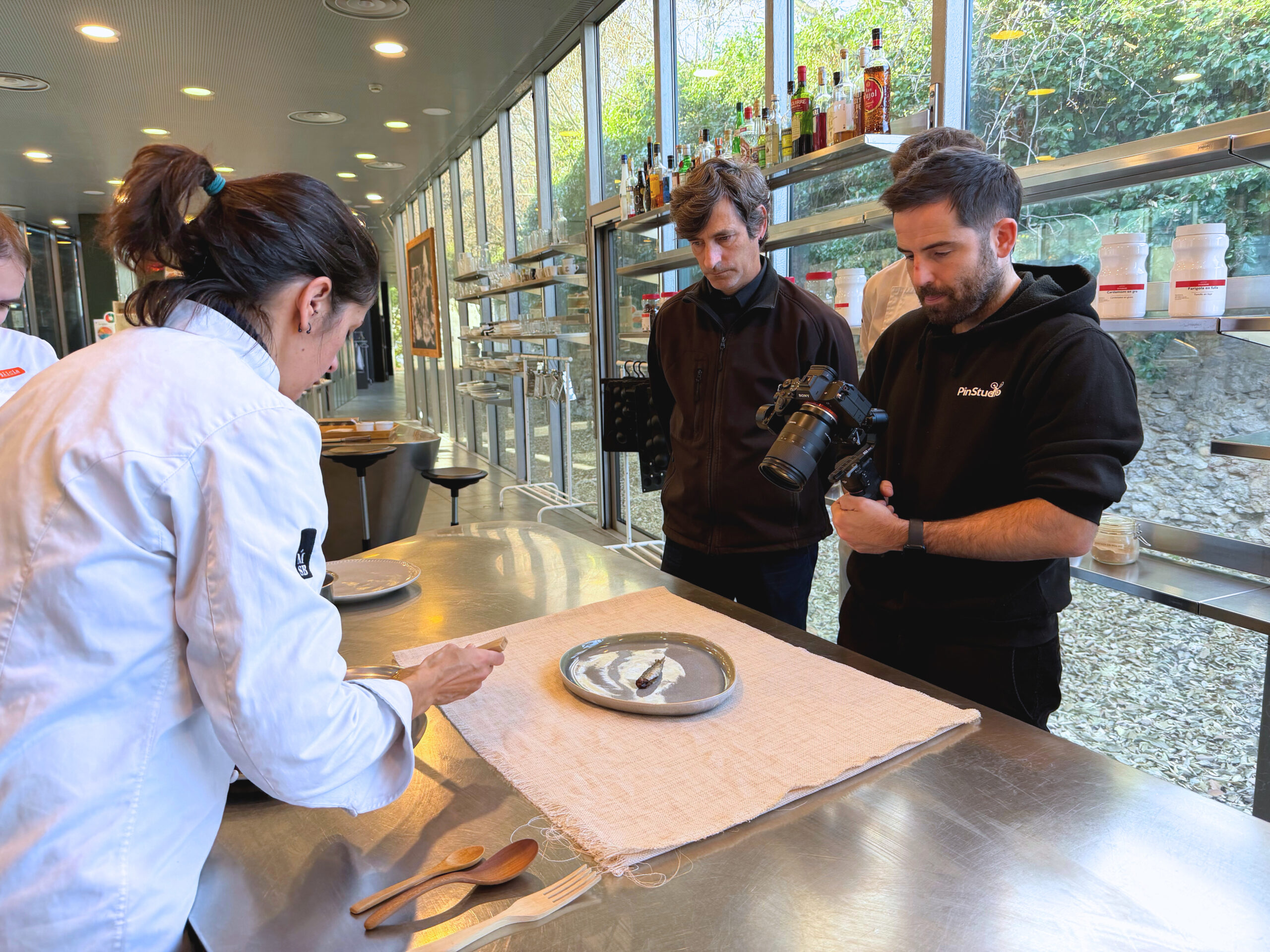
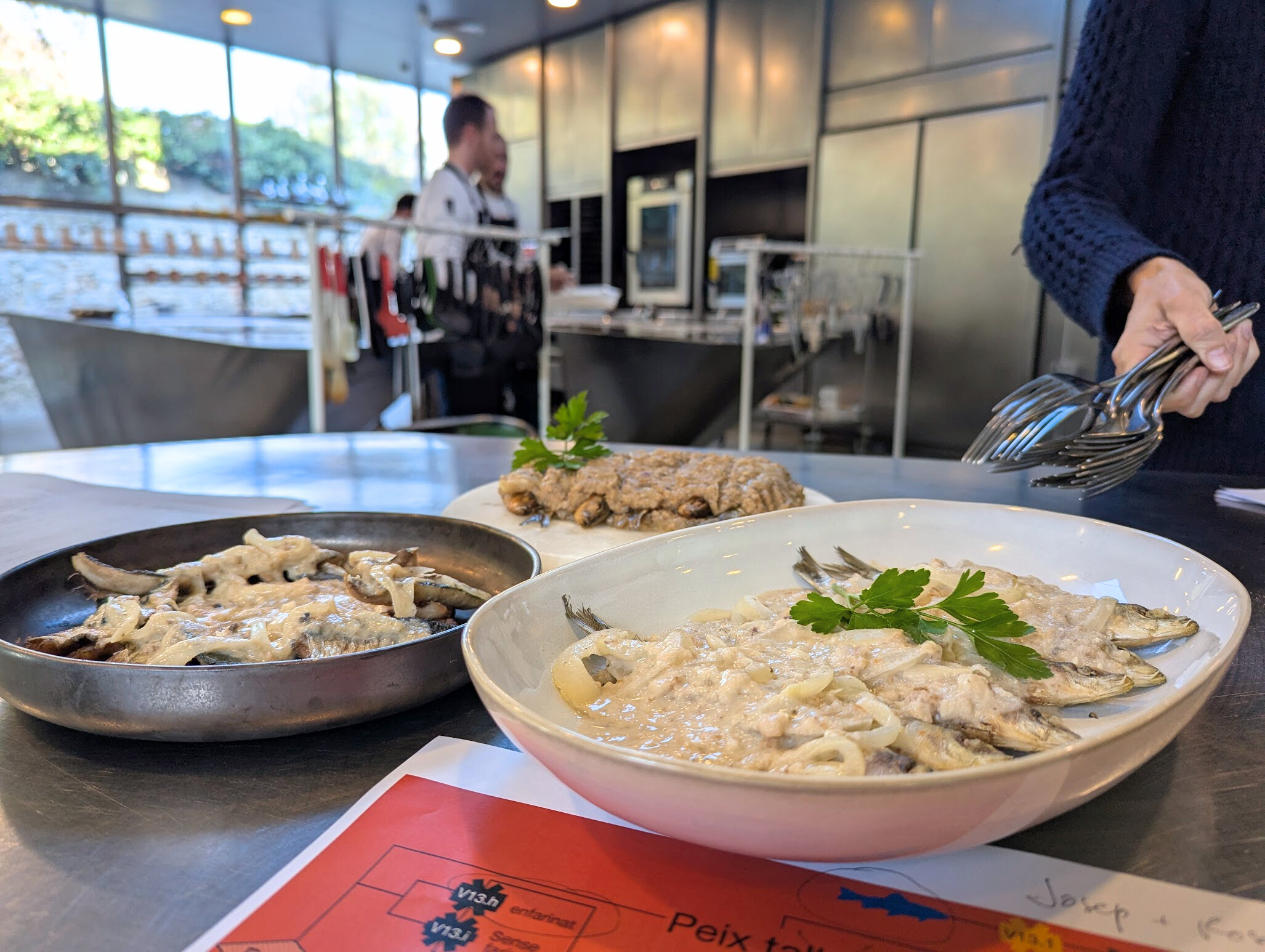
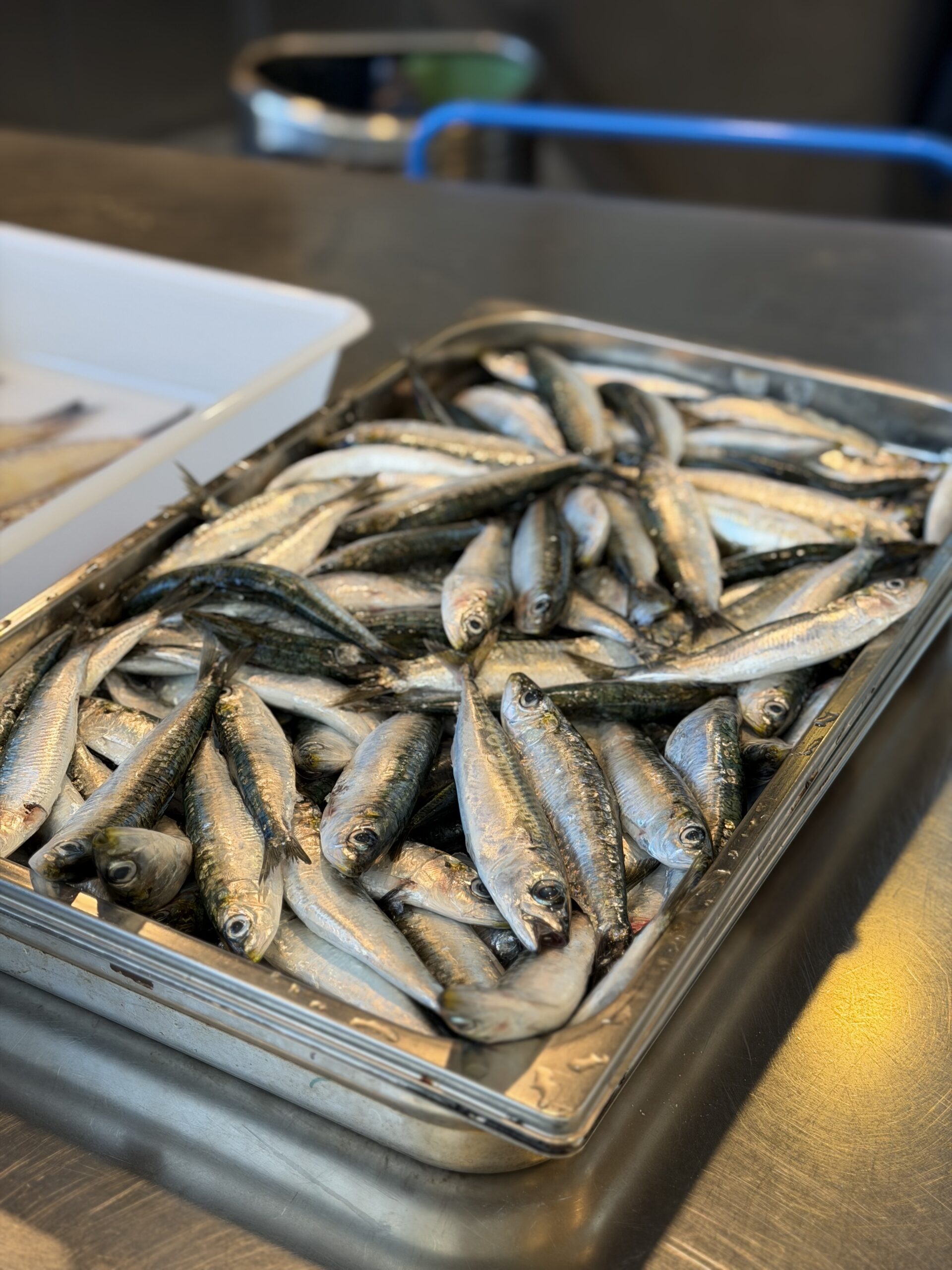
At each step, we tested the vital points in the recipe, avoiding optional suggestions, such as chopped raisins or toasted almonds and hazelnuts). At the end of the cooking session, each team presented their dish. Together, we tasted the versions of the most “basic” interpretation of the escabetx recipe, using sardines as the fish for both the broth, sauce, and fried product to which the sauce was added.
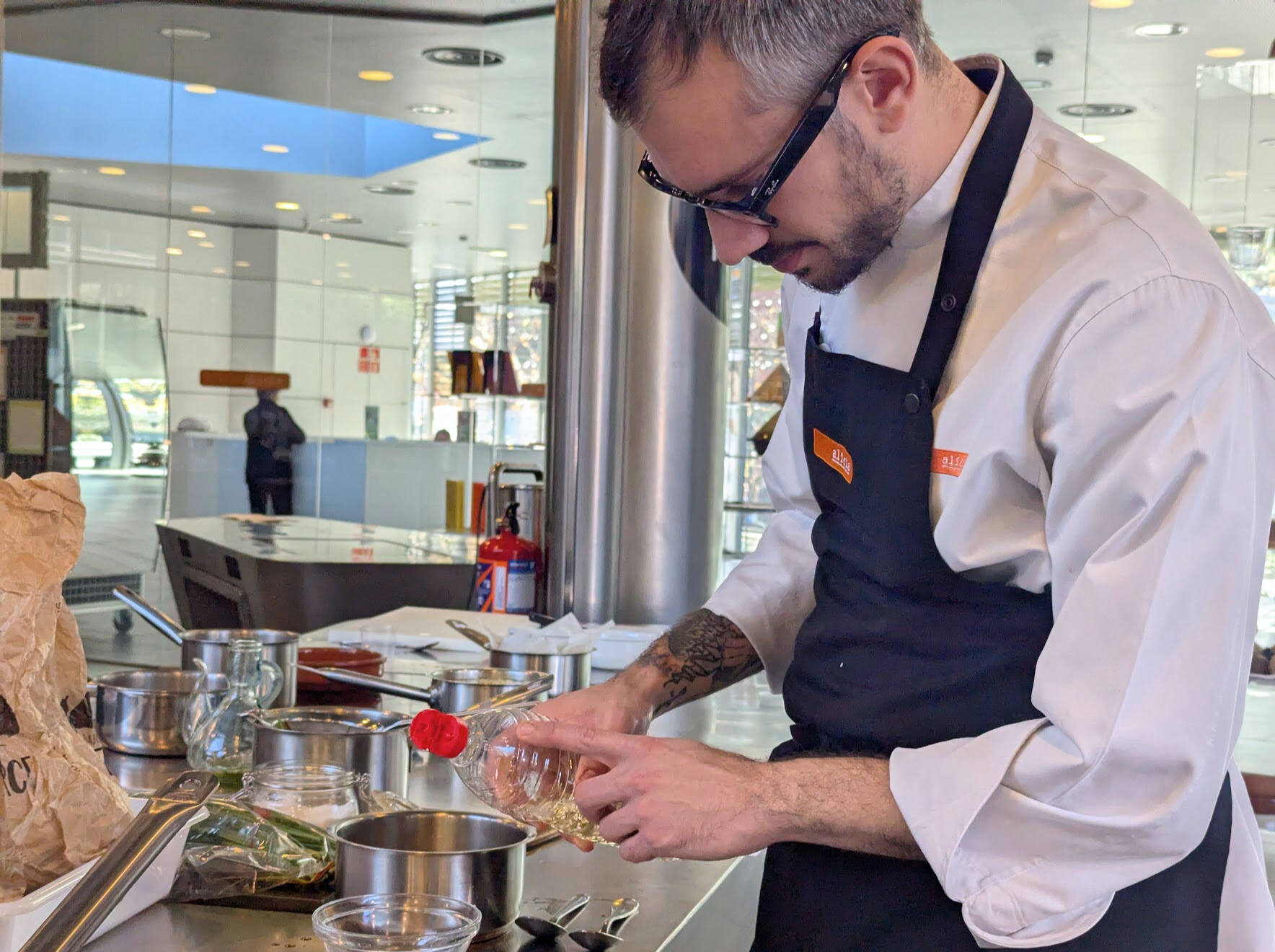
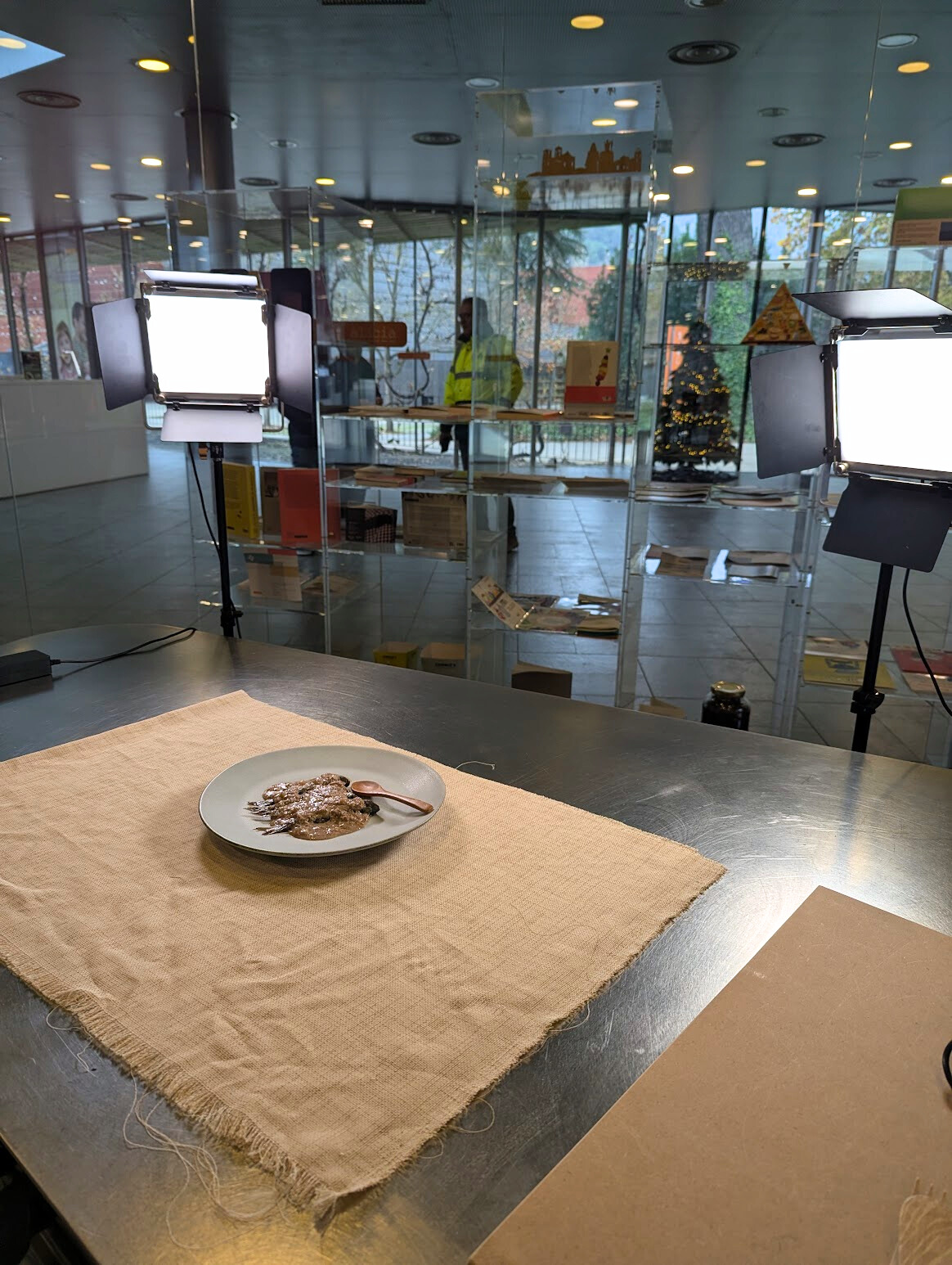
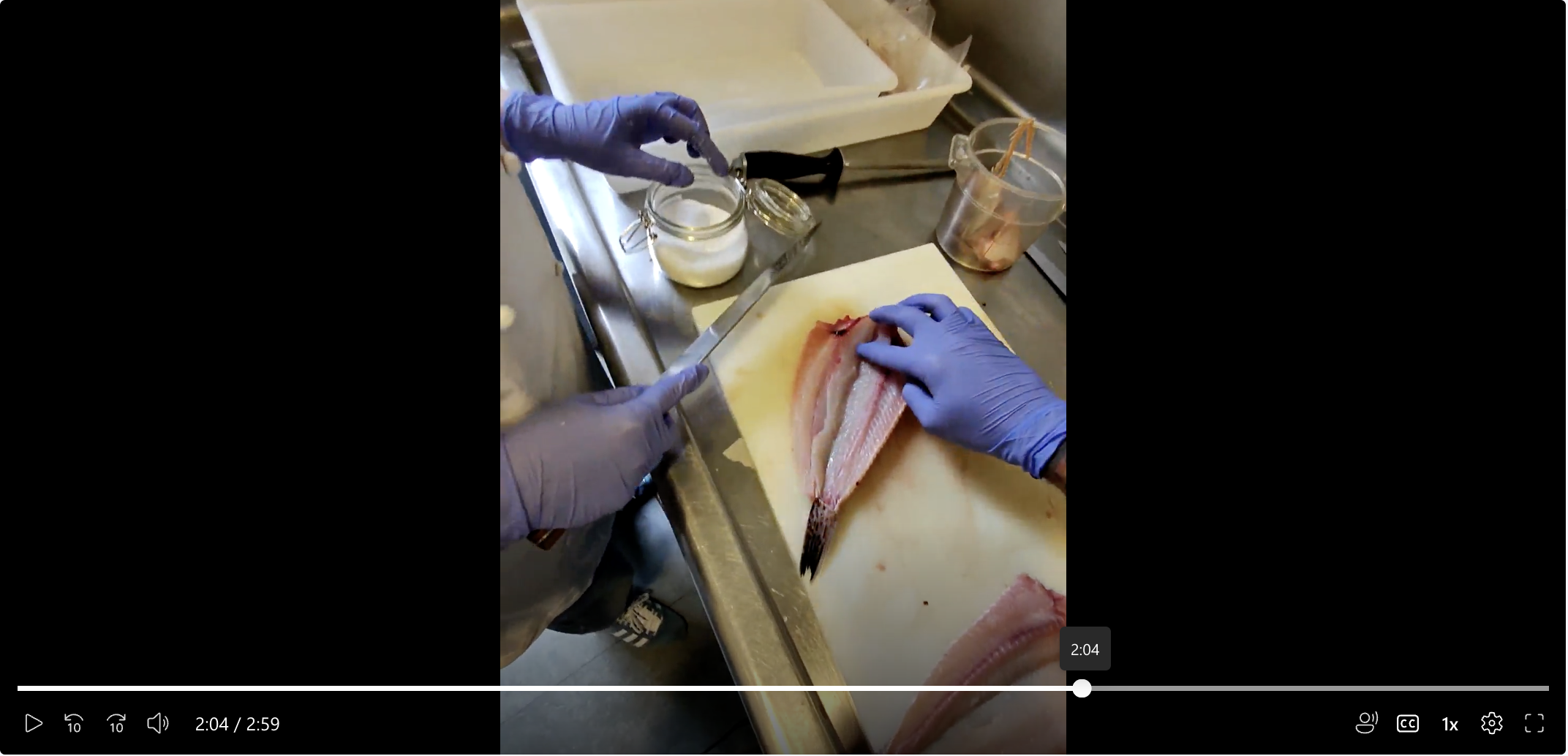
We documented these processes within each team, including measurements and interpretations, which one circulating member collated. A photographer was also hired to record and photograph two of the sessions, and several members also took photographs and videos on their phones. Some of the chefs at Fundació Alícia even wore Ray-Ban Meta Glasses, recording their POV in real time for one of RELISH’s partners working to develop digital tools for cooking instruction!
Perhaps both surprising and unsurprising, we ended up presenting three dishes that tasted and appeared quite different (but all quite delicious!).
Developments and variations
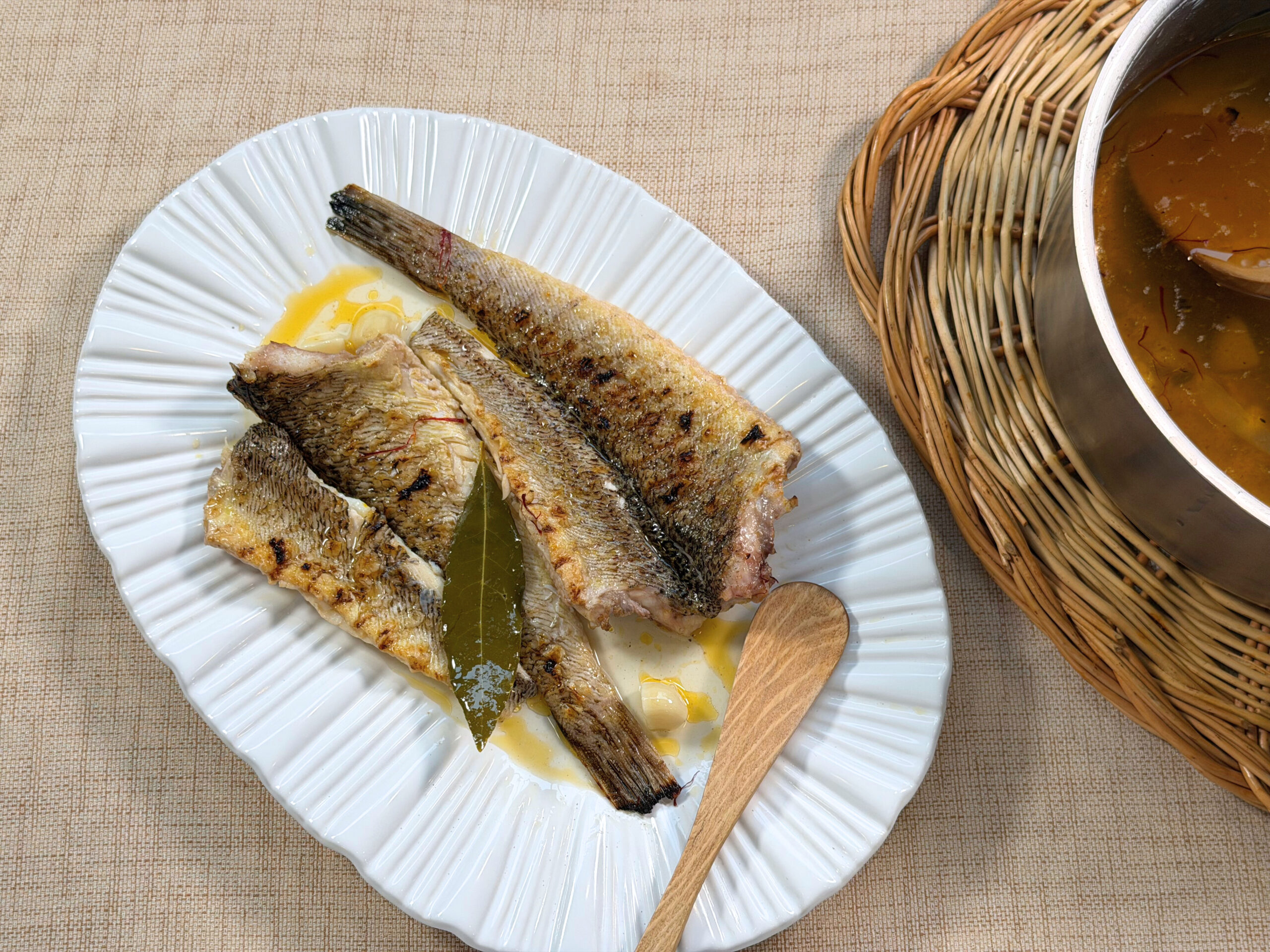
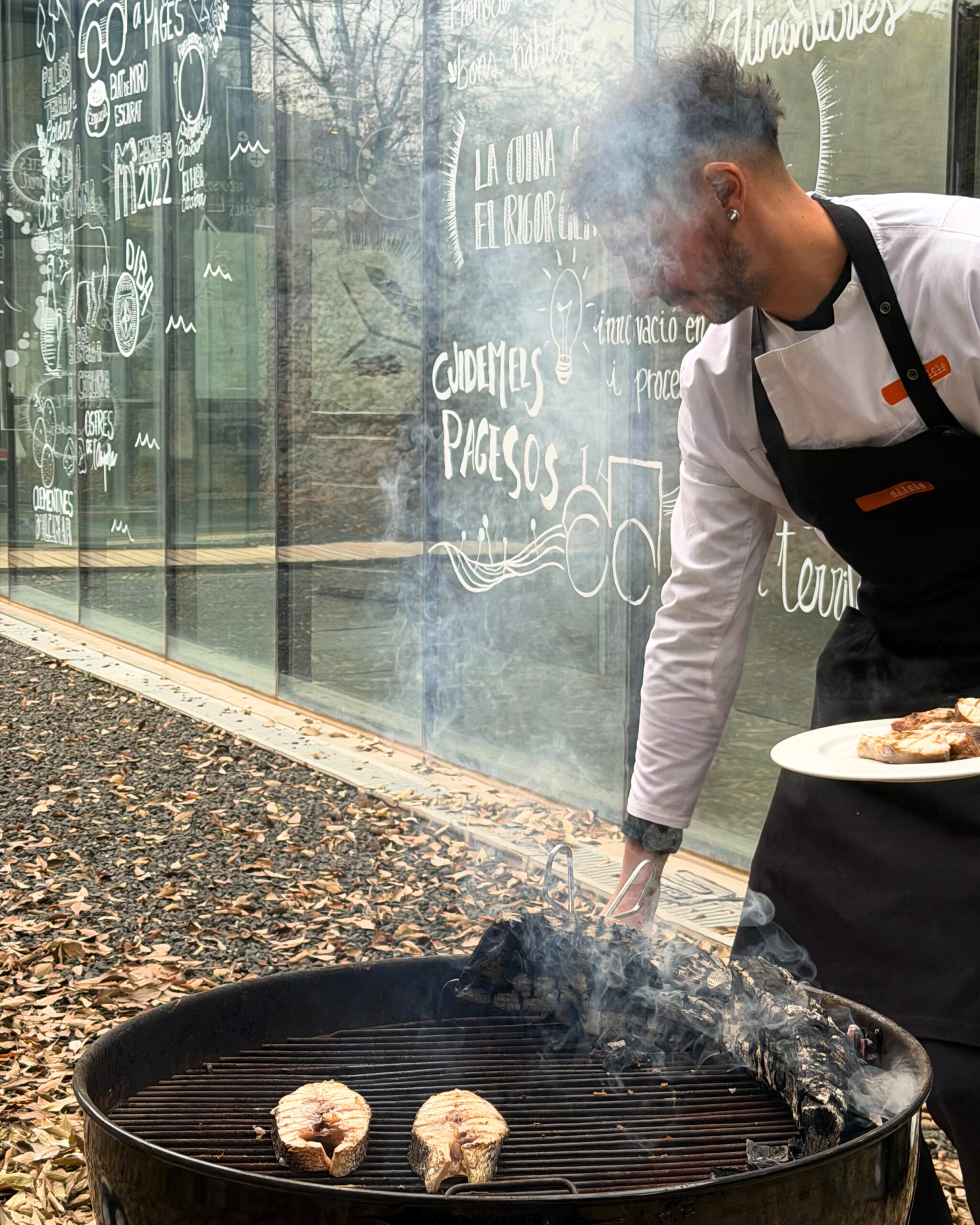
Over the next four days, we kept working, refining, adding, documenting, and exploring escabetx through time, from monastic versions served in almost transparent brine to thick, orange sauces with citrus and saffron. We were also visited by Fundació Alícia administrators, staff, and visiting chefs.
We also used the lessons from previous variations, seeing how omissions or techniques could affect the recipe’s taste. We also worked on formalizing some of the recipes, creating measurements and steps to codify our version in a more familiar format.
We also ate a lot of sardines.
Early reflections
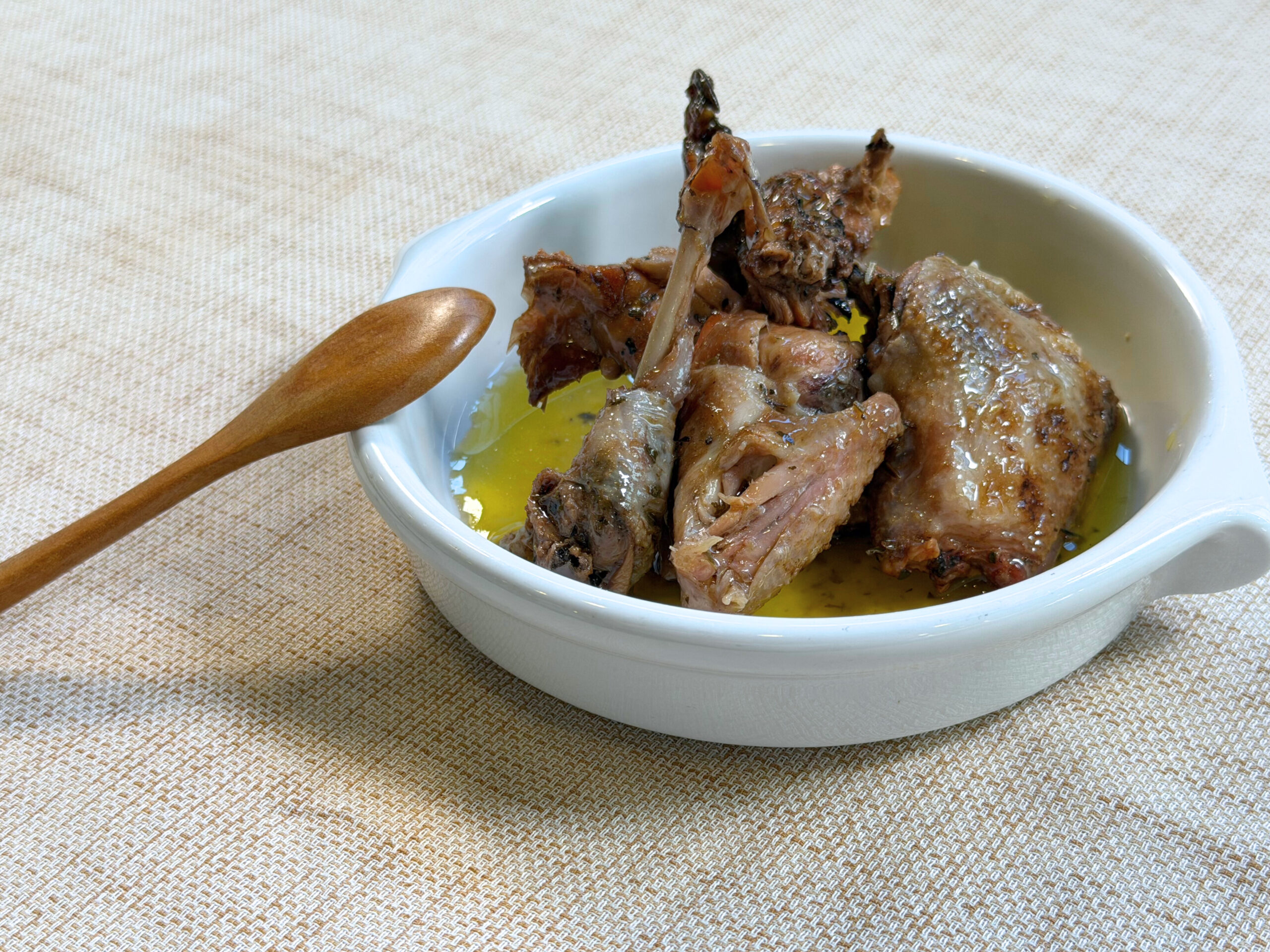
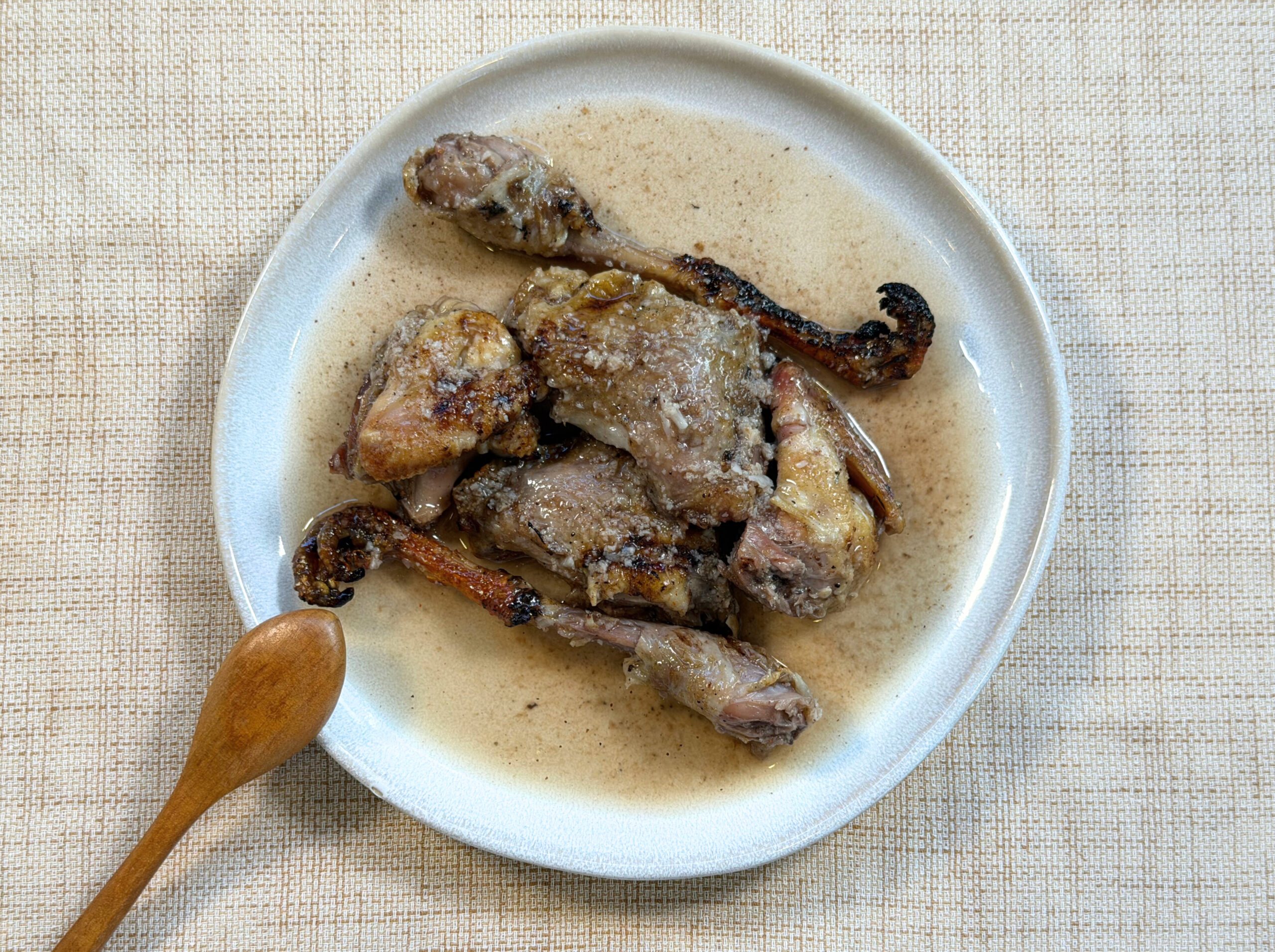
The escabetx recipe was a Ship of Theseus, as broths, seasonings, timings, recipe language and tone, and flavour profiles swapped and switched. One favourite was a version made with partridge—tender, succulent, and intense. Earlier escabetx versions can be wildly different than contemporary versions, but together we found that they could also resonate with one another across time, such as intense acidic flavour profiles. We discussed how they could also offer interesting techniques or textures for chefs today seeking to develop their own escabetx menu offerings.
Overall, we grappled with a fascinating question about recipe, documentation, and the passage of time: Could we design a method for documenting a recipe that could be used to make a dish in the near or far future? Relatedly, can lessons in “future-proofing” recipes be found in the past?
Stay tuned this year, as we release more videos and interviews about the workshops, as well as continue going back in time to find lessons in escabetx’s ancestor, sikbaj!
Gallery