
Activities
Surveys
Ongoing RELISH surveys
Participants wanted! Each survey will take you to an external site.


Resources
Public RELISH reports, working papers, bibliographies, communication kits, press releases, et cetera.



Calls for Applications
RELISH research positions, workshops, and events
Master's Thesis Position, Barcelona Supercomputing Center (Still Accepting Applications), Barcelona
RELISH Master’s Thesis Position
Hosting Institution: Barcelona Supercomputing Center, Barcelona INITIAL DEADLINE: November 28, 2025; Still Accepting Applications (December)
This master thesis focuses on developing Natural Language Processing (NLP) models to automatically detect, extract, and classify recipes from historical texts, ranging from medieval manuscripts to modern cookbooks. The project will create a novel dataset of historical recipes for cultural and culinary heritage analysis, with results visualized through an interactive web application.
Details: 6 months. Hybrid (In Barcelona). Possibility of paid internship.
Postdoctoral Research Position in HCI (Due May 7, 2025), Instituto Superior Técnico
RELISH Postdoctoral Research Position in HCI
Hosting Institution: Instituto Superior Técnico, University of Lisbon. APPLY BY: May 7, 2025
We are looking for an HCI researcher with experience or interest in web tech stacks towards a web platform around food and recipes. You can apply even if you haven’t finished your PhD, as long as you complete it before you start this position.
The call is open until May 7, and you can apply via this link. Please don’t hestitate to contact Augusto Esteves ([email protected]) if you have any questions or concerns about the posting.
Start date is flexible and the committee will consider requests for remote working. This position is a work contract (24 months) and not a scholarship – i.e., it includes 14 monthly payments per year (12 months plus summer and Christmas allowances), work insurance, meal allowance, and contributions to social security in Portugal.
Call for Papers (Due April 31, 2025): "Recipes and Gastronomy as Cultural Heritage"
“Recipes and Gastronomy as Cultural Heritage: Meaning, Methodology and Media”
October 22–25, 2025. The University of Gastronomic Sciences, Pollenzo (Italy). APPLY BY: April 31, 2025.
The University of Gastronomic Sciences (UNISG) invites proposals to participate in an academic workshop taking place October 22-25, 2025 in Pollenzo, Italy. This methodological workshop is organized within the framework of the EU-funded RELISH project and aims to engage historians and other scholars across disciplines in discussions on the nature of recipes – how they are created, interpreted, shared, and transformed over time and across contexts.
Each session will be dedicated to different approaches to studying recipes as cultural artifacts producing human heritage, or the strategies of their digital organization and
dissemination.
We invite two types of case studies, focusing on European examples and beyond:
- Research case studies that critically utilize recipes as sources to understand historical and social processes.
- Recipes in digital dissemination projects, addressing their use in digital humanities, public history, or indexing projects.
Submission Guidelines: We invite proposals for case studies focusing on historical or contemporary case studies that fit within the workshop’s thematic scope. Please submit proposals to Simone Cinotto at [email protected] by April 30, 2025.
Publications
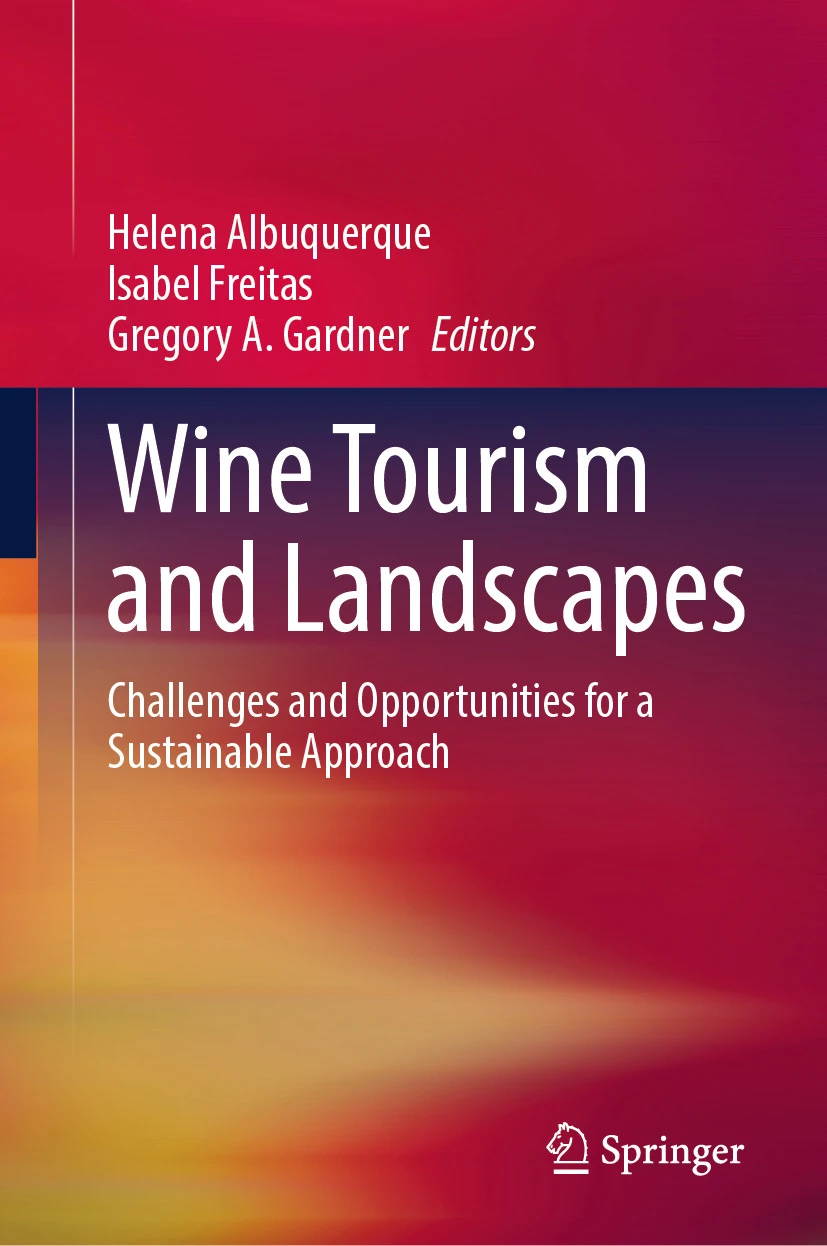
Book Chapter (in "Wine Tourism and Landscapes"
“Spain’s Wine Industry and Climate Change: Past Trends, Present Challenges, and Future Scenarios in 2050”
Full citation: Bas, Enric and Anna Bossler. 2025. “Spain’s Wine Industry and Climate Change: Past Trends, Present Challenges, and Future Scenarios in 2050.” In Wine Tourism and Landscapes: Challenges and Opportunities for a Sustainable Approach, edited by Helena Albuquerque, Isabel Freitas, and Gregory A. Gardner, 27–51. Cham: Springer. https://doi.org/10.1007/978-3-031-97934-7_2
ABSTRACT |Spain is the world’s third-largest wine producer and the country with the most extensive vineyard area globally. Beyond its deep-rooted cultural heritage—shaped by a gastronomic tradition inherited from the ancient Greeks and Romans—the wine industry plays a crucial role in the country’s economic and social fabric. Simultaneously, Spain ranks as the second most visited country in the world, welcoming 85 million international tourists in 2023 (Datosmacro, Datos sobre turismo, 2024), with tourism contributing approximately 15% of the national GDP (DataEstur, Estadísticas Españolas sobre Turismo, 2024). The intersection of these two industries positions it among the top three global destinations for wine tourism. This chapter provides an overview of the current state of Spain’s wine industry and wine tourism, drawing on bibliographic sources and secondary data. Using foresight methodology and systematic horizon scanning, we identify key drivers of change across economic, political, ecological, cultural, security, and technological dimensions. Through structured scenario analysis, we design four distinct future scenarios for 2050, shaped by the interplay between technological adoption and regulatory frameworks. These scenarios, derived from systems theory, explore how policy adaptation strategies could address challenges posed by digitalization, shifting consumer lifestyles, and climate change. Rather than attempting to predict the industry’s future, this study aims to reflect on potential alternative business models that could emerge in response to these evolving social and technological dynamics, providing strategic insights for industry stakeholders and policymakers.
Research Article (Published in Nature Food)
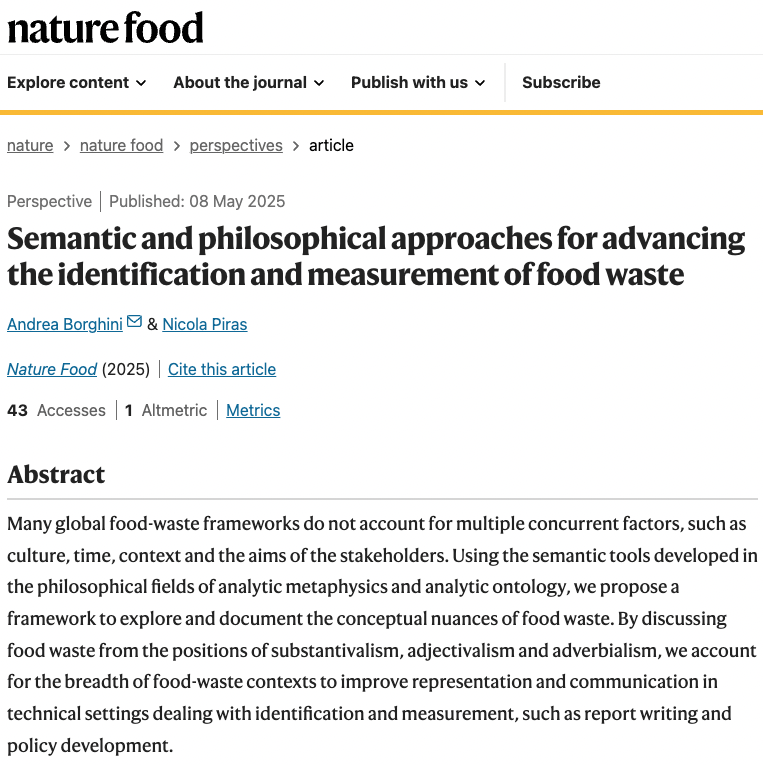
“Semantic and philosophical approaches for advancing the identification and measurement of food waste.” Nature Food.
Full citation: Borghini, Andrea and Nicola Piras. 2025. “Semantic and philosophical approaches for advancing the identification and measurement of food waste.” Nature Food. https://doi.org/10.1038/s43016-025-01167-2
ABSTRACT | Many global food-waste frameworks do not account for multiple concurrent factors, such as culture, time, context and the aims of the stakeholders. Using the semantic tools developed in the philosophical fields of analytic metaphysics and analytic ontology, we propose a framework to explore and document the conceptual nuances of food waste. By discussing food waste from the positions of substantivalism, adjectivalism and adverbialism, we account for the breadth of food-waste contexts to improve representation and communication in technical settings dealing with identification and measurement, such as report writing and policy development.
Events
(May 12–13, 2025) Recipe Ontology Hack-A-Thon #1
Recipe Ontology Hackathon #1: Temporal aspects of recipes
Department of Literature and Philosophy, University of Florence
May 12-13, 2025
March 12, 10:30am session with Andrea Borghini and Marta Vilardo. “Defining challenges of representing temporal aspects in recipes.”
- Working with examples coming from the food and philosophy domain:
- Challenge 1: PHASES. Examples: time in neapolitan pizza and/or espresso (temporality and optimal qualities); defining/constitutive/characterizing phases (leavening/baking in Neapolitan pizza making) vs non-defining/non-constitutive/non-characterizing (hand-rolled)
- Challenge 2: EFFICIENCY. Examples: time in chemically aged rhum (shortening of process) and/or iceberg lettuce (lengthening of life) or UHT milk (lengthening of life)
- Challenge 3: CONTEXT. Examples: time in octopus in cataluña (seasonality) and/or spaghetti al pomodoro in italy (typicality) and / or quinoa/sushi (from niche to global)
March 13, 11:30am session with Andrea Borghini. “Taking on CHALLENGE 2: EFFICIENCY”
- Workshopping on how to represent efficiency in FoodOn, exploring alternative representations in CCO/DOLCE/UFO